

YONGNING
NEWS CENTER
What are the notable features of chain grate stoker equipment?
Release Time:
Apr 15,2022
What are the significant features of chain grate equipment?
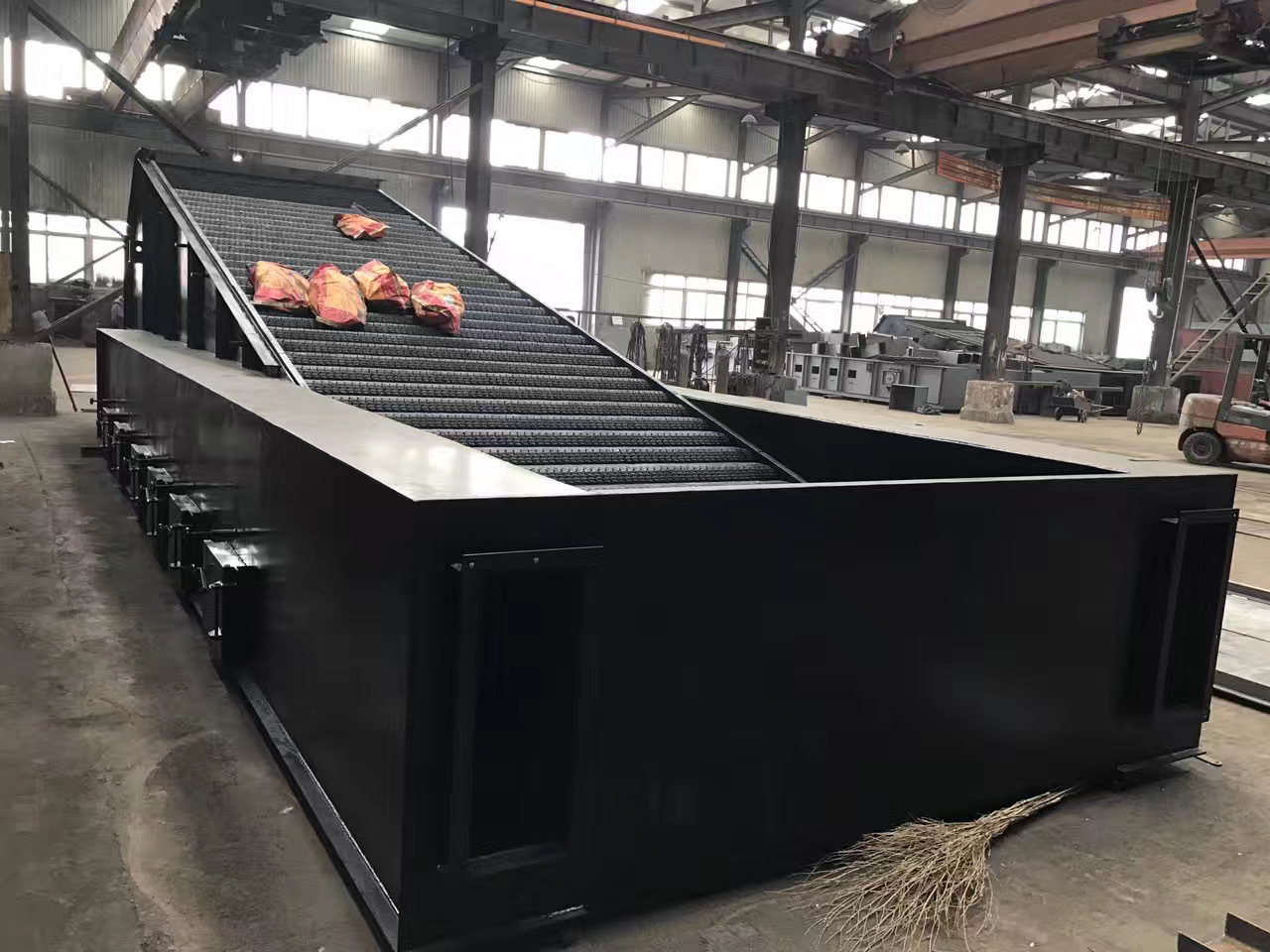
Chain GrateThe equipment is a type of furnace that is very suitable for the combustion of mild coal and biomass. The chain grate mainly consists of fixed grate bars, movable grate bars, a drive mechanism, and a reciprocating mechanism.
The tail end of the chain grate equipment is clamped on the movable beam, and the front end of the movable grate bar is directly fitted onto the adjacent lower level circular grate bar, making the entire grate bar distinctly step-shaped with a certain angle of inclination, facilitating oil drainage. Each row of movable beams is connected to two channel steels to form a whole, constituting a movable frame. When the motor drives the eccentric wheel and the push-pull rod connected to the frame, the movable grate bar and the movable frame move reciprocally. The stroke of the movement is about 30-100mm, with a reciprocating frequency of about 1-5 times/min. The speed can be adjusted. The tail end of the fixed grate bar is clamped on the fixed beam, and similar to the movable grate bar, its front end is also placed on the adjacent lower level grate bar. The pressure of the disc and the reciprocating motion will cause wear. The air required for combustion can be supplied through the longitudinal gaps between each layer of grate bars and the horizontal gaps between each layer of grate bars. The ventilation cross-section ratio of the grate is about 7% to 12%. At the end of the inclined grate, the fuel falls into the ash pit through the burnt grate.
Chain GrateThe combustion process and characteristics. The combustion process of the chain grate furnace is similar to that of the chain grate furnace. The fuel falls from the hopper and enters the furnace chamber through the adjusting door, adjusting the thickness of the fuel layer. Under the reciprocating feeding action of the movable grate, the fuel slowly moves from front to back along the inclined grate surface, undergoing preheating, drying, and volatilization. The stages of fire, coke combustion, and ash burnout are analyzed. The new fuel at the head of the firebed is ignited and burned by the high-temperature flue gas and radiation from the furnace arch. One of the main differences between the chain grate and the chain grate is the relative motion between the grate and the fuel. Due to the continuous raking action of the movable grate bars, some new fuel is pushed into the already ignited firebed below, artificially improving the fire situation. During the return process, the movable grate rakes some of the ignited carbon particles back to the bottom of the unburned layer, becoming the ignition heat source for the bottom fuel. At the same time, the raking action loosens the fuel layer, enhances permeability, promotes disturbance of the combustion bed, and crushes or sheds the ash shell on the surface of the coke and fuel blocks. Compression and turning enhance combustion and burn out. During operation, the feeding amount of the reciprocating grate can be controlled not only by the height of the gate but also by adjusting the stroke and frequency of the movable grate bars.
Since the combustion process of the reciprocating grate furnace still occurs in stages along the length of the grate, it is still necessary to supply air in sections along the length of the grate. Generally, during normal operation, the air volume in the middle section of the grate is large, and the corresponding air pressure is also the highest. The air supply in the front and rear sections is less, especially in the fuel preheating and drying section at the head of the firebed. To enhance the disturbance and mixing of airflow in the furnace, the chain grate furnace chamber should still be arranged with front arches, rear arches, or intermediate firewalls, and secondary air should be appropriately arranged to improve ignition efficiency. The fuel conditions at the top of the firebed. The airflow in the furnace chamber flows reasonably, allowing the combustible gases generated at the front end of the grate to flow through the high-temperature combustion zone and mix fully with the excess air rising from the burnout zone, further combusting.

The main advantages of the chain grate are: except for the head of the firebed, the ignition of the fuel is basically double-sided, which is better than the chain furnace; the adaptability of the fuel is also better than that of the chain furnace, especially for low-quality fuels with strong bonding properties, high ash content, and difficult ignition; due to the continuous inclination and loosening of the fuel layer, the contact between air and fuel is greatly enhanced, resulting in high combustion intensity. If handled properly, tantalum can also reduce thermal losses from incomplete chemical and mechanical combustion. At the same time, the structure of the chain grate is simple, and the metal consumption is lower than that of the chain furnace, saving initial investment.
The disadvantage is that the hot coke is constantly raked out from the head of the ten movable grate bars, so the temperature is very high and can easily burn out. In addition, it is difficult to find and replace the grate after it is burned out or falls off, causing leakage. The red fire may burn the gas chamber and frame below the grate, affecting the safe operation of the boiler. Secondly, due to structural reasons, the air leakage and material leakage on both sides of the inclined grate are relatively large, and the firebed is not flat enough, making the combustion of the firebed unstable during operation. Therefore, it is necessary to improve the side sealing structure of the reciprocating furnace.
RELATED INFORMATION
How to choose a Manufacturer for grate production
Apr 01,2024
Precautions for Using the Grate
Mar 07,2024
The difference between reciprocating chain grate and biomass reciprocating grate.
Feb 15,2024
Photo News
Social Media


Contact Us
Add: Yongning Economic Development Zone, Wafangdian City, Dalian
Tel: 0411-85170074
Mobile: 13050579874 / 13364115533 / 13841142000
Fax: 0411-85171287
E-Mail: 120297882@qq.com
All Rights Reserved © 2025 Wafangdian Yongning Grate Manufacturing Co., Ltd.