

YONGNING
NEWS CENTER
Boiler grate installation, ignition operation steps, and knowledge related to waste incineration.
Release Time:
Jun 03,2022
According to the different calorific values of the waste, allocate different air volumes to supply combustion air, while each beam'sBoiler Gratedrive can be independently controlled, facilitating independent control of the feed amount and air volume in different combustion areas.
It not only complies with national energy conservation and emission reduction policies but also reduces heating costs and ensures heating quality. For boiler grates, the structure type, area, and combustion conditions directly reflect the carbon content in the slag.
Each row of beamsBoiler Grateis equipped with overlapping structures to prevent waste from leaking between adjacent boiler grates, and there is almost no friction between the same row of boiler grates; the front part of the boiler grate is equipped with elastic wear-resistant scrapers to reduce wear and extend the service life of the grate. The bottom surface of the boiler grate is equipped with cooling steel inserts, which provide good cooling effects with primary air, and the grate is almost not damaged.
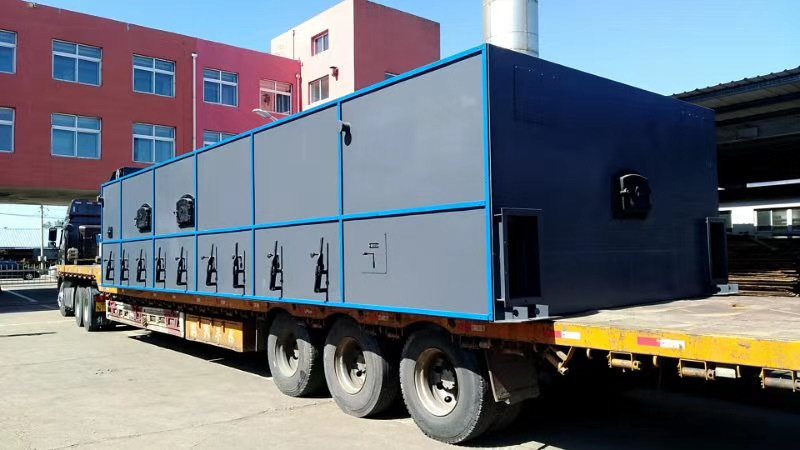
The structure and movement mode of the boiler grate are simple, not easy to block, have a low failure rate, and save a lot of maintenance costs. The boiler grate is replaced starting from the fourth year, with an annual replacement rate of less than 2%. The modular structure of the furnace section is conducive to road transportation and on-site installation, allowing for complete assembly in the workshop first to improve the precision required for on-site installation.
The ignition operation steps for the boiler grate are as follows:
Boiler GrateDuring ignition operation, raise the coal gate to a higher position, spread 20 to 30 mm thick coal and fire starters such as wood and cotton yarn in front of the grate, and spread a thin layer of ash in the middle and rear parts of the grate to prevent a large amount of cold air from entering.
Ignite the fire source, slowly rotate the grate, sending the fire to about 1 to 1.5 meters in front of the furnace, then stop the rotation of the grate. When the current arch temperature gradually rises to ignite the new coal, adjust the coal gate to maintain the coal layer thickness at 70 to 100 mm, slowly rotate the grate, and adjust the induced draft fan to bring the furnace chamber negative pressure close to zero to accelerate combustion.
However, when the coal moves to the second air door, and the second air door is properly opened. Continue moving to the third and fourth air doors, then sequentially open the third and fourth air doors. When moving to the rear air door of Z, since the coal has basically burned out, the rear air door of Z will be opened less or not opened at all depending on the combustion situation.
When the bottom fire is covered by the chain grate, appropriately increase the coal layer thickness and correspondingly increase the air volume to improve the speed of the boiler grate, maintaining the furnace chamber negative pressure at 20 to 30 pa to ensure the coal layer burns as fully as possible.
The precautions for burning waste with the boiler grate are as follows:
In actual operation, the residence time of municipal waste in the furnace must be greater than the total time required for theoretical drying, thermal decomposition, and combustion. At the same time, the residence time of the flue gas in the furnace should ensure the complete combustion of gaseous combustible substances in the flue gas. Under other unchanged conditions, the longer the residence time, the better the incineration effect, but the longer the residence time, the smaller the treatment capacity of the incinerator; conversely, if the residence time is too short, the waste will not burn completely. Therefore, the length of the residence time should be determined based on specific circumstances. Reasonably adjust the residence time of waste in the furnace. Different types of waste have different residence times in the furnace. The furnace chamber must reasonably adjust the residence time based on the dryness, type, and incineration effect of the waste to ensure stable and complete combustion.
After the waste enters the boiler, it is firstBoiler Gratedried by the heat of the furnace, then burned on the second and third layers of the grate, and finally burned out on the fourth layer of the grate. If the residence time on each level of the grate is too long, it will affect the waste treatment capacity; if it is too short, it will affect the waste incineration effect. Based on more than a year of production experience, the author concludes that to ensure the waste in the furnace is fully dried, the residence time of the waste on the grate should be 100 to 110 seconds, the residence time on the second and third layers of the grate should generally be 80 to 100 seconds, and the residence time on the fourth layer of the grate should be 180 to 200 seconds to ensure complete combustion of the waste. In summary, only by reasonably adjusting the residence time of the waste in the furnace can the waste burn stably.
RELATED INFORMATION
How to choose a Manufacturer for grate production
Apr 01,2024
Precautions for Using the Grate
Mar 07,2024
The difference between reciprocating chain grate and biomass reciprocating grate.
Feb 15,2024
Photo News

Social Media


Contact Us
Add: Yongning Economic Development Zone, Wafangdian City, Dalian
Tel: 0411-85170074
Mobile: 13050579874 / 13364115533 / 13841142000
Fax: 0411-85171287
E-Mail: 120297882@qq.com
All Rights Reserved © 2025 Wafangdian Yongning Grate Manufacturing Co., Ltd.