

YONGNING
NEWS CENTER
Some knowledge points about the grate, as told by the scale grate manufacturer.
Release Time:
Jun 08,2022
Slag GrateThe manufacturer believes that the incineration of municipal solid waste is a very complex physical and chemical reaction process, which can usually be divided into three stages: drying, thermal decomposition, and combustion. Incinerators can be classified into mechanical grate type, fluidized bed type, and rotary type. Among them, mechanical grate incinerators are the mainstream equipment for large-scale waste incineration. The main advantages of this type of furnace are mature technology, stable operation, relatively low ash residue, low slag loss rate, and wide adaptability. Most solid waste can be burned directly in the furnace without any pretreatment.
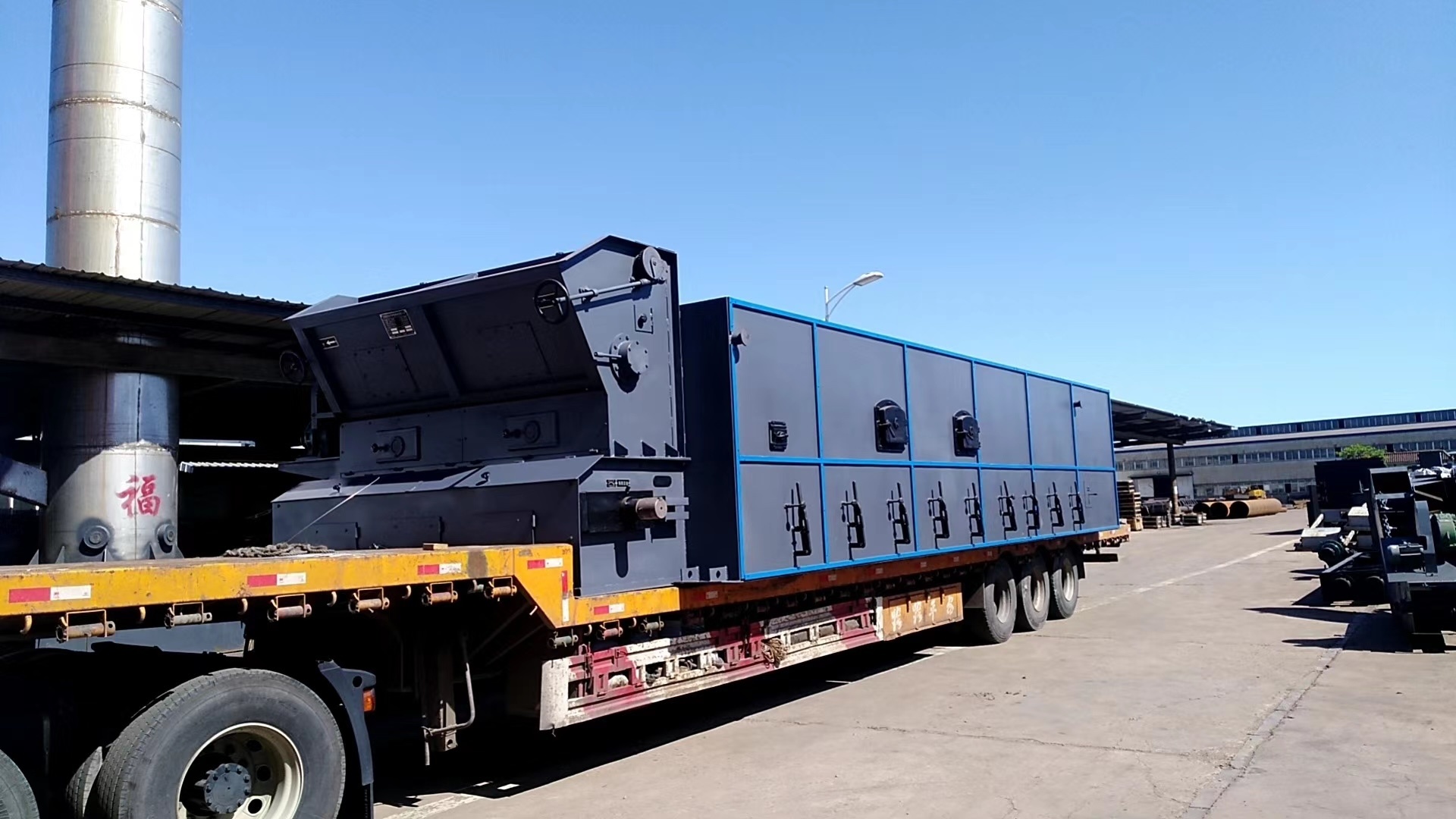
The manufacturer believes that the grate is part of a boiler or industrial furnace, which accumulates solid fuel and allows it to burn effectively. The entire grate mainly consists of two parts: the frame and the grate itself. There are various types of grates, including fixed, moving, reciprocating, and vibrating types. There are also fixed grates, chain grates, manually operated grates, and reciprocating grates.
Slag GrateThe manufacturer believes that the shape of the chain grate is very similar to that of a belt conveyor. Coal falls from the coal hopper onto the grate due to its own weight and moves slowly from front to back with the grate. The height of the coal gate can be adjusted to control the thickness of the coal layer. The coal is heated by radiation in the furnace, sequentially preheating, drying, igniting, burning, and burning out. The ash moves to the back with the grate and falls into the ash hopper for discharge. There are many types of chain grates, which can generally be divided into three types based on their structural forms: chain belt type, beam type, and scale type.
The manufacturer believes that the ignition conditions of the chain grate are poor, and the ignition of the coal is mainly caused by the radiation heat from the furnace flame and arch in sequence, so the coal on top ignites first and then gradually burns out. Generally, after the coal enters the furnace, it moves slowly from front to back with the grate, mainly for the residual heat and drying of the coal to burn.
Slag GrateThe manufacturer believes that during actual operation, the residence time of municipal solid waste in the furnace needs to be greater than the total time required for theoretical drying, thermal decomposition, and combustion. At the same time, the residence time of the flue gas in the furnace should ensure the complete combustion of gaseous combustible substances in the flue gas. Under other unchanged conditions, the longer the residence time, the better the incineration effect, but the longer the residence time, the smaller the processing capacity of the incinerator, and the shorter the residence time, the more incomplete the waste combustion. Therefore, the length of the residence time should be determined based on specific circumstances. It is necessary to reasonably adjust the residence time of waste in the furnace. Different types of waste have different residence times in the furnace.
The manufacturer believes that due to the large volume of the incinerator, the temperature distribution inside the furnace is uneven, meaning that the temperature at different parts of the incinerator varies. The incineration temperature here refers to the temperature that can be achieved when waste is burned in a combustion chamber (combustion zone). Generally speaking, the temperature in the area above the waste layer in the combustion section, close to the combustion flame, is high, reaching 850 ~ 1100. The higher the calorific value of municipal solid waste, the higher the achievable incineration temperature, which is more favorable for the incineration of municipal solid waste. At the same time, temperature and residence time are a pair of related factors; appropriately shortening the residence time at higher temperatures can maintain a good incineration effect.
RELATED INFORMATION
How to choose a Manufacturer for grate production
Apr 01,2024
Precautions for Using the Grate
Mar 07,2024
The difference between reciprocating chain grate and biomass reciprocating grate.
Feb 15,2024
Photo News

Social Media


Contact Us
Add: Yongning Economic Development Zone, Wafangdian City, Dalian
Tel: 0411-85170074
Mobile: 13050579874 / 13364115533 / 13841142000
Fax: 0411-85171287
E-Mail: 120297882@qq.com
All Rights Reserved © 2025 Wafangdian Yongning Grate Manufacturing Co., Ltd.